
The Body, the Trophy, and the Name
Legado en los huesosThis flow follows the novel’s transformation of bodily mutilation from a disturbing repeated detail into a signature that exposes an unseen author and the human cost of turning victims into symbols.
increasing Bearing strength in each event
 decreasing
Bearing strength in each eventdecreasingA Repeated Absence
The Missing Arm
Anomalies Across Cases
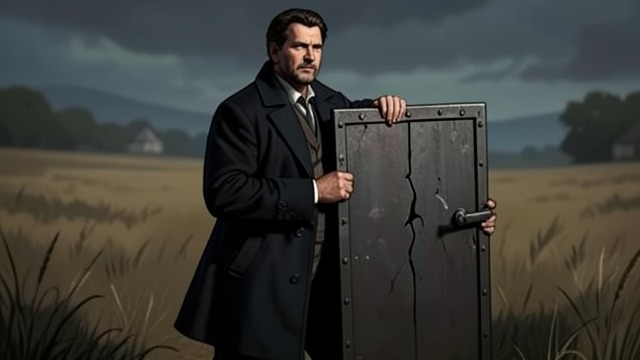
The killings of Johana Márquez and Lucía Aguirre, alongside the Logroño case, initially seem to belong to separate investigations. Their perpetrators are violent men who confess, yet each victim’s arm has been removed with a precision inconsistent with the disorder elsewhere in the scene.
The missing limbs matter as much as the murders. Their absence creates a gap in every case file, suggesting that somebody has taken something the confessed killers neither planned nor understood.
A Signature Without a Face
The word “Tarttalo” appears after multiple offenders die, drawing attention toward a single intelligence behind their apparently unrelated crimes. A name that resembles a mythic monster turns the amputations into part of a deliberate message.
This shift changes how the investigators read evidence. The central question is no longer simply which man killed each woman, but who arranged the conditions, removed the trophies, and shaped the aftermath.
Remains as a Message
The Cave of Trophies
Bodies Reassembled as Evidence
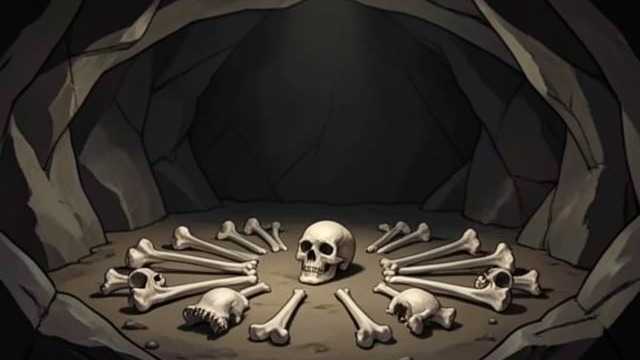
Human remains discovered in Arri Zahar Cave establish a material connection to the missing arms. Forensic comparison identifies Johana Márquez among the remains, while the arrangement and tooth marks suggest that the bones have been placed and handled rather than abandoned at random.
The cave turns an absence into an accumulation. What had been missing from separate crime scenes appears together, making it possible to imagine a collector who regards the victims’ bodies as trophies.
The Monster’s Display
The arrangement recalls the legend of Tarttalo, the cannibal giant whose cave is surrounded by bones. The myth provides a vocabulary for the killer’s self-image, but the forensic evidence remains essential: resemblance to legend is not proof of supernatural power.
By bringing myth and bodily evidence together, the novel shows how a criminal can use inherited stories to magnify his own identity. The victims risk becoming props in that performance, so the investigation must restore their individual histories to the remains.
An Ancestor in the Church

A Family Connection
The DNA Revelation
A bone from the desecrated church carries a genetic relationship to Amaia Salazar. The discovery establishes that the remains belong to her ancestry and shows that the attacks have been staged to draw her personally into the investigation.
The ancient infant bone also expands the meaning of the desecration. It is simultaneously evidence of grave robbery, an object used in a local ritual tradition, and a message aimed at a detective whose family history is known to the offender.
A Private Violation
When a second set of remains matches Amaia exactly, forensic analysis reveals her dead twin’s existence. The body has been turned into a direct instrument of intimidation, linking a public crime scene to a concealed family loss.
The evidence makes the provocation unmistakable, but it cannot give Amaia back the childhood or sister she never knew. Identification restores a nameable relationship to the dead while exposing the violence and secrecy that formed her family’s past.
The Freezer of Keepsakes
The Private Collection
A Home Behind the Mask
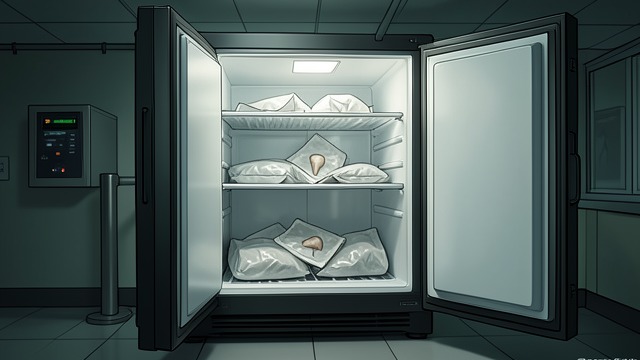
Doctor Berasategui’s immaculate apartment appears less like a lived-in home than a carefully maintained professional set. The concealed freezer disrupts that image: twelve individually wrapped parcels are labeled with dates that correspond to murders.
One parcel contains a small piece of human tissue associated with Johana Márquez. Its repeated thawing and refreezing, together with the bite marks, make the killer’s relationship to the trophy disturbingly intimate.
The Victim Reduced to an Object
The parcels reveal how the offender’s mythic self-image depends on possession. He does not merely want to control events; he preserves pieces of the people he has harmed as private objects, turning their bodies into proof of his appetite and power.
Amaia’s discovery restores the moral perspective that the killer’s performance threatens to erase. These are not relics of a legend but human remains taken from particular women, and their identification converts the staged collection into evidence against its owner.
Returning the Bones
Restoring the Dead to Kinship
The Burial Reopened
The family coffin in Polloe Cemetery contains no body, only gravel and remnants of its supposed wrapping. The empty coffin exposes the falseness of the burial story without resolving every question about the twin’s last moments.
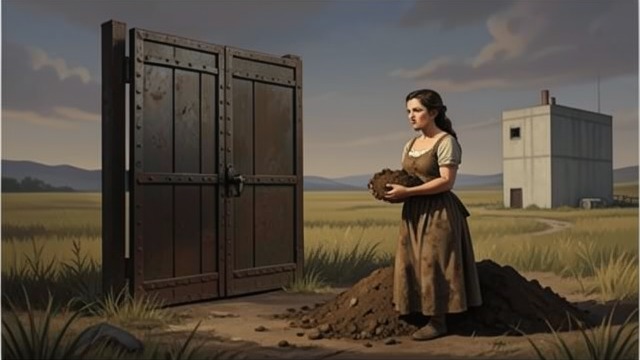
Later, Amaia takes her sister’s recovered remains back to the family burial ground and places them beneath the soil. The gesture answers the earlier theft with care rather than display.
Beyond the Trophy
The return of the bones rejects the logic by which the killer collected and exhibited human remains. A body that had been turned into a signature is once again treated as someone’s sister, someone mourned, and someone entitled to a place among the family dead.
The act offers a limited form of repair, not a reversal of history. It cannot restore the lost life or undo the concealment surrounding the birth, but it refuses to let the final meaning of the remains belong to the person who stole them.
When Teniente Padua links the first three cases
After the first human bones are found at Arri Zahar Cave
After DNA testing identifies the first infant remains at Arizkun Church
Near the climax, during the search of Doctor Berasategui’s apartment
In the final scene, when Amaia returns her twin’s remains to the family burial ground
